
What you eat in the evening also affects your sleep, and your sleep directly impacts your weight. Understanding this link allows you to choose your light meals for weight loss with an additional criterion: nutritional quality aimed at better nighttime rest.
Tryptophan and melatonin: the link between light evening meals and sleep quality
Tryptophan is an amino acid found in certain protein-rich foods like salmon, turkey, or cottage cheese. Once ingested, it contributes to the synthesis of serotonin and then melatonin, the hormone that regulates falling asleep.
Recent studies in nutrition show that a evening meal rich in tryptophan improves sleep quality and, by extension, weight regulation. Disrupted sleep disturbs hunger hormones (ghrelin and leptin), leading to increased eating the next day. Therefore, the choice of a light evening meal is not just about counting calories: it is also about nourishing a wake-sleep cycle conducive to weight loss.
A piece of salmon accompanied by steamed zucchini or a bowl of cottage cheese with a few seeds checks both boxes: low caloric density and a supply of tryptophan. This type of weight-loss meal acts on two levers simultaneously, where a simple green salad only covers the first.
To explore other combinations that respect this balance between lightness and targeted nutritional intake, the light meals from La Cuisine de Watoote offer interesting associations between lean proteins and vegetables.

Weight-loss meals and protein before bed: what classic recipes overlook
The majority of articles on meals for weight loss recommend reducing portions in the evening. This advice is correct but incomplete. A sufficient intake of protein before bed limits nighttime muscle breakdown and slightly increases resting metabolism in physically active individuals.
A light evening meal containing a source of lean protein (grilled chicken, cottage cheese, lentils) protects muscle mass during nighttime fasting. Less muscle means a lower basal metabolism, leading to a slower weight loss over time. This is a common trap of overly strict low-calorie diets in the evening.
Which protein-rich foods to prioritize at dinner
- Grilled chicken or turkey, accompanied by green vegetables (beans, spinach, zucchini), provide complete proteins with very little saturated fat.
- Cottage cheese or plain yogurt, consumed plain with a drizzle of olive oil and herbs, make a protein snack that digests slowly.
- Lentils or quinoa, paired with a salad of raw vegetables, offer a plant-based protein source with fibers that prolong satiety.
The key is to aim for a meal that satisfies without weighing down digestion. A light meal is not an empty meal: it is a meal whose composition works in favor of nighttime metabolism.
Should you stop eating after 6 PM to lose weight?
This idea has circulated for years and remains ingrained in many popular recommendations. The available data does not support it. Nutrition sources based on scientific literature now emphasize a specific point: the timing of dinner matters much less than the overall composition of the plate and the caloric balance of the day.
In other words, a weight-loss meal taken at 8:30 PM with chicken, vegetables, and a moderate portion of whole grains does not compromise weight loss. In contrast, snacking on processed foods at 5 PM because you forbid yourself from having dinner creates a much more problematic imbalance.
What really matters for daily weight loss is the regularity of meals and their nutritional density. A dish of stuffed zucchini with vegetables and a drizzle of olive oil, served at a time that suits your lifestyle, remains a relevant choice regardless of the clock.
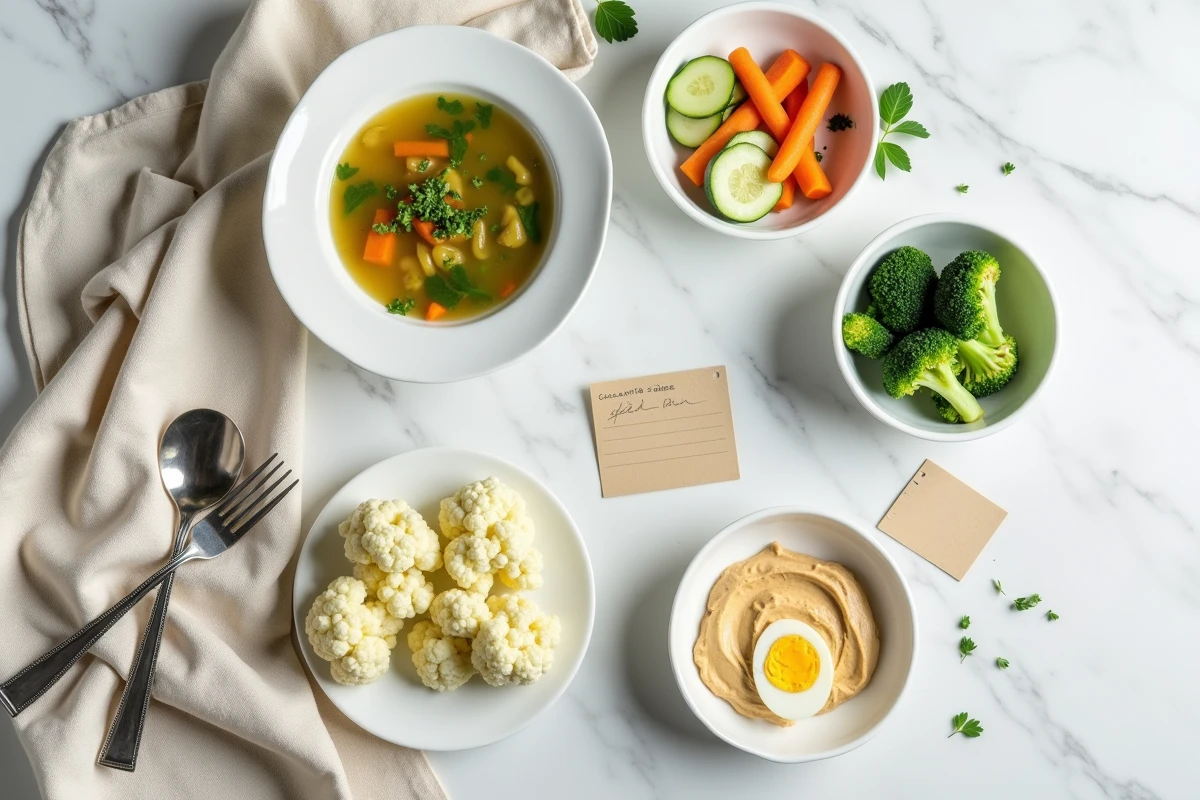
Weight-loss salads: composition mistakes that negate lightness
Salad is the number one reflex when looking for a light dish. However, some composition mistakes turn a salad into a meal as caloric as a classic dish. Excessive addition of industrial dressing, fried croutons, or large amounts of grated cheese skews the energy balance.
An effective salad for weight loss relies on a few simple principles:
- A base of raw or cooked vegetables (green salad, cucumber, tomatoes, grated carrots) that provides volume without excessive calories.
- A source of lean protein (grilled chicken, hard-boiled egg, plain tuna) for satiety.
- A controlled seasoning: a spoonful of olive oil, lemon juice, fresh herbs. Oil remains a fat, even if it is of good quality.
- Small amounts of carbohydrates (quinoa, lentils) if the salad constitutes the main dish of lunch or dinner.
The main trap remains the dressing: two tablespoons of creamy dressing can represent as many calories as the protein in the dish. Seasoning yourself with raw ingredients eliminates this risk.
Building a weekly menu with light dishes without monotony
Alternating food families throughout the week prevents the boredom that leads to giving up. An effective weight-loss menu does not rely on repeating the same dish but on rotating between fish, poultry, legumes, and eggs, paired with different seasonal vegetables.
Monday could be a herb-marinated chicken fillet with sautéed zucchini. Wednesday, a lentil soup with spinach. Friday, a piece of salmon with ratatouille. Each meal remains light, but the variety of textures and flavors keeps the pleasure of eating.
Planning weight-loss meals for the week reduces impulsive decisions at dinner time, which are often the most costly in terms of calories. Preparing vegetables in advance on Sunday and storing portions of cooked proteins in the refrigerator turns a light evening meal into an assembly of just a few minutes.
Some prefer to cook everything on Sunday, while others find that pre-prepared dishes lose flavor after two days. Adapting the method to one’s own constraints remains the only sustainable approach to losing weight without turning every meal into a chore.