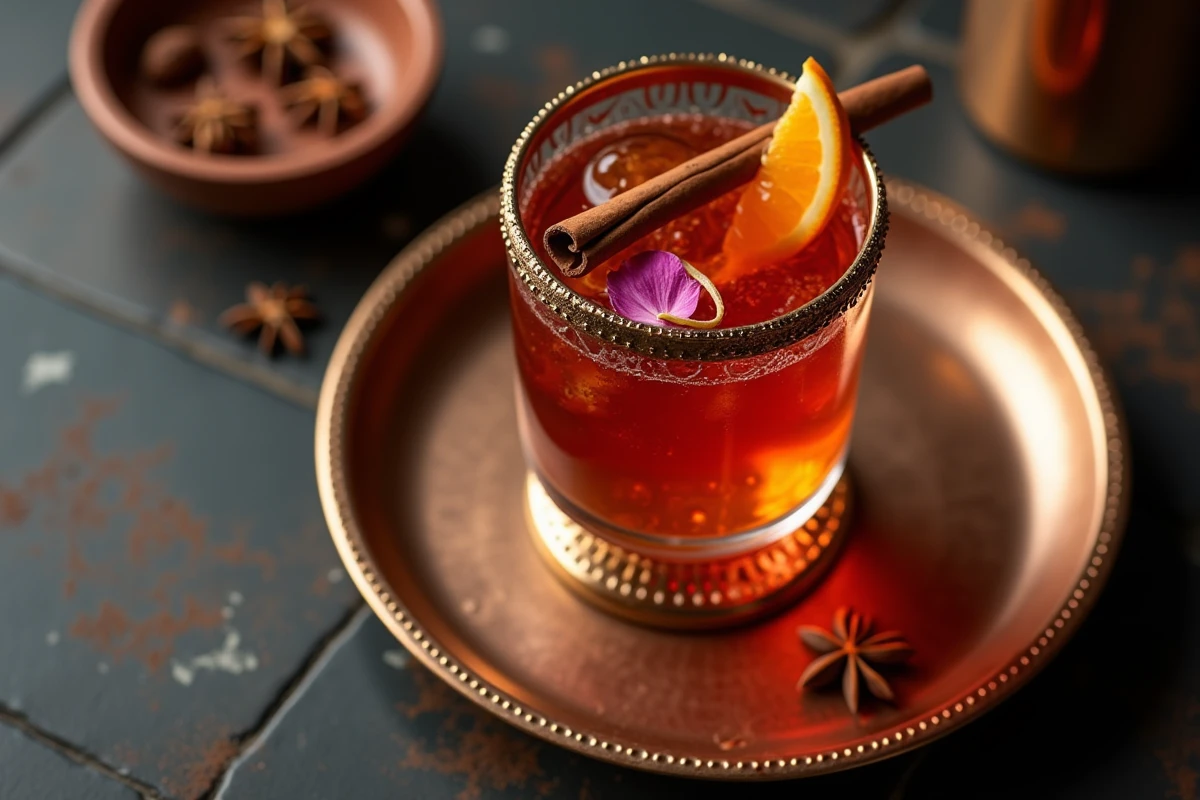
An “oriental” cocktail relies on a specific repertoire of ingredients: floral waters (rose, orange blossom), whole spices (cardamom, saffron, star anise), herbal bitters, and fermented or thickened textures like lassi or bissap. These elements define a flavor family distinct from classic tropical cocktails based on sweet fruits and rum.
Spices and floral waters: the aromatic base of a credible oriental cocktail
The majority of cocktails labeled “oriental” in event bars are limited to pomegranate syrup, red fruits, and golden decoration. The result is sweet, generic, and lacks any specifically oriental character. To achieve a coherent aromatic profile, the work begins with spices and floral waters, not sugar.
Green cardamom brings a camphoraceous freshness that works well in a clear spirit (vodka, gin) as well as in a non-alcoholic base. One to two crushed pods, infused for ten minutes in simple syrup, are sufficient. Unlike industrial cardamom syrup, this homemade infusion maintains the tension between warm and cool, without heaviness.
Rose water is the most risky ingredient. A few drops enhance a mixture based on lemon and honey. An excess turns the glass into perfume. The operational rule: never exceed half a teaspoon for a 25 cl glass. Orange blossom water, being sweeter, is more forgiving of dosage errors.
Saffron, on the other hand, affects both color and taste. Three stigmas infused in hot alcohol (or in hot water for a mocktail) release a golden hue and earthy notes that anchor the cocktail in a Levantine or Iranian register. Exploring these oriental drink ideas allows for spotting combinations that work before embarking on personal experiments.

Lassi and bissap texture in a cocktail: what changes the glass
An oriental cocktail that only focuses on aroma remains incomplete. Texture distinguishes a well-crafted cocktail from a simple flavored juice. Two references allow for breaking out of the liquid-ice-straw pattern.
Lassi, an Indian drink made from whipped yogurt, introduces a creaminess that Western cocktails rarely utilize. A salty lassi diluted with gin or vodka and spiced with roasted cumin yields a result that surprises the palate without overwhelming it. The non-alcoholic version works just as well, lengthened with sparkling water and a splash of lime.
Bissap (hibiscus flower infusion) brings natural acidity, an intense purple color, and a slight astringency. This drink, ubiquitous in West Africa and the Middle East, advantageously replaces cranberry or pomegranate in a cocktail. Its subtle bitterness balances the sweetness and creates a more adult equilibrium.
- Salty cumin lassi: whipped yogurt, roasted cumin, lime, sparkling water, optionally gin or vodka. Serve in a low glass, without crushed ice.
- Bissap-ginger: concentrated hibiscus infusion, freshly grated ginger, date syrup, amber rum or nothing at all. The sweetness of the date balances the acidity of the bissap.
- Rose lassi: yogurt, rose water (minimal dosage), cardamom, honey. A dessert version to be sipped slowly at the end of a meal.
Bitters and tannins: the missing piece of exotic cocktails
Classic tropical cocktails rely on sugar and acidity. Credible oriental cocktails add a third dimension: bitterness. It is this that prevents the glass from tipping into confectionery.
Turkish coffee, unfiltered and finely ground, serves as a powerful bitter. Two centiliters of cooled Turkish coffee, mixed with coconut milk and a light caramel syrup, produce a cocktail with deep notes. This combination recalls the spiced coffee served in souks without falling into the sweet caricature of “oriental latte.”
Strongly brewed black tea (like bergamot tea or very concentrated mint tea) also works as a bitter base. The tannin in tea plays a role similar to that of vermouth in a classic cocktail: it structures, it dries, it provides length on the palate.
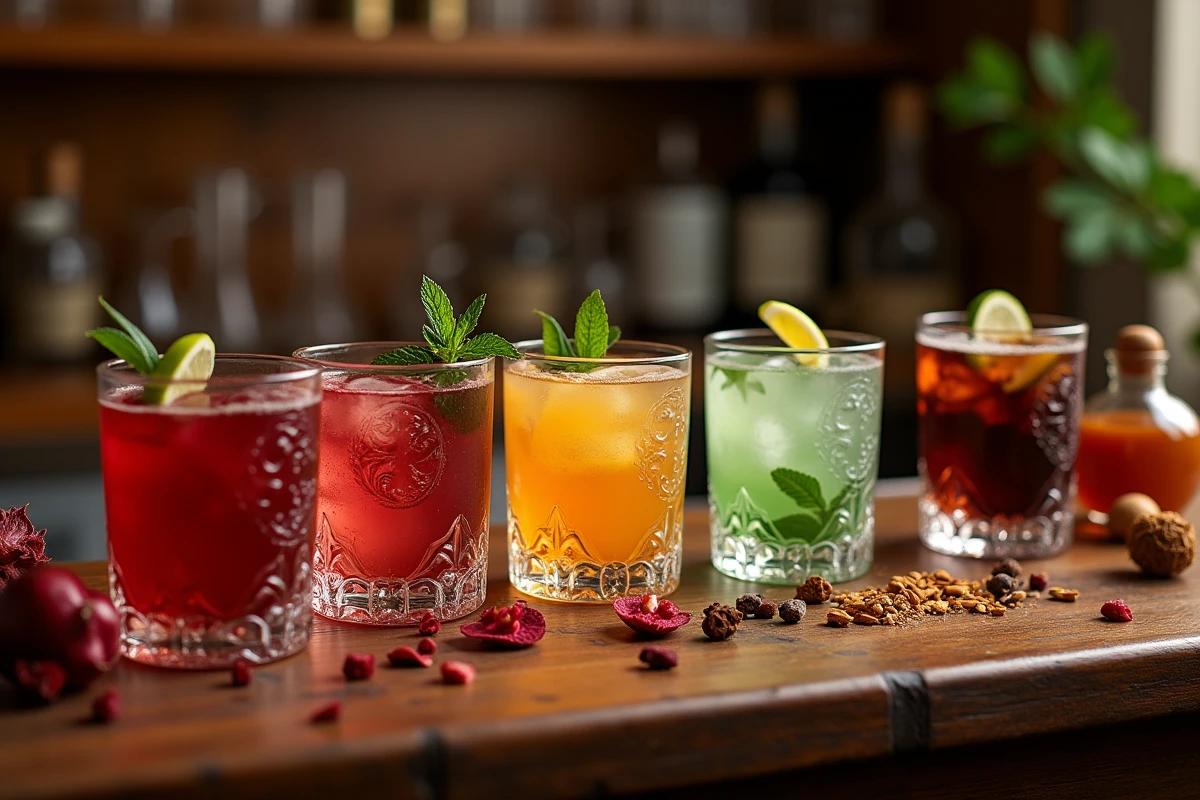
A final lever, less known: sumac. This tangy and slightly astringent spice, used in Lebanese cuisine, dissolves in warm syrup. The result adds a fruity acidity very different from that of lemon, with notes of underbrush that anchor the cocktail in a specific terroir.
Non-alcoholic oriental cocktails: going beyond the sweet mocktail
The trend of premium mocktails, prevalent in events, often leans towards overly sweet drinks dressed in careful presentation. For a credible oriental mocktail, the same principles apply: spices, bitterness, texture.
- Iced bissap-cardamom: hibiscus infusion, infused cardamom, splash of lime, ice cubes. No syrup added if the bissap is already slightly sweet.
- Mango-saffron lassi: yogurt, mango pulp, infused saffron, a hint of black pepper. The mango provides sweetness, saffron depth, and pepper tension.
- Iced mint and ginger tea: concentrated green tea, fresh ginger, honey, sparkling water. Serve very cold in a Moroccan tea glass for consistency in gesture.
These recipes share a common point: sugar is never the main ingredient. Sweetness comes from fruits, honey, or dates, always counterbalanced by a bitter, acidic, or spicy element.
A successful oriental cocktail is not recognized by its decoration or color. It is recognized by the balance between flavors that most bars do not yet associate: floral, earthy, bitter, and creamy. It is this assembly that gives the palate something truly different to explore.